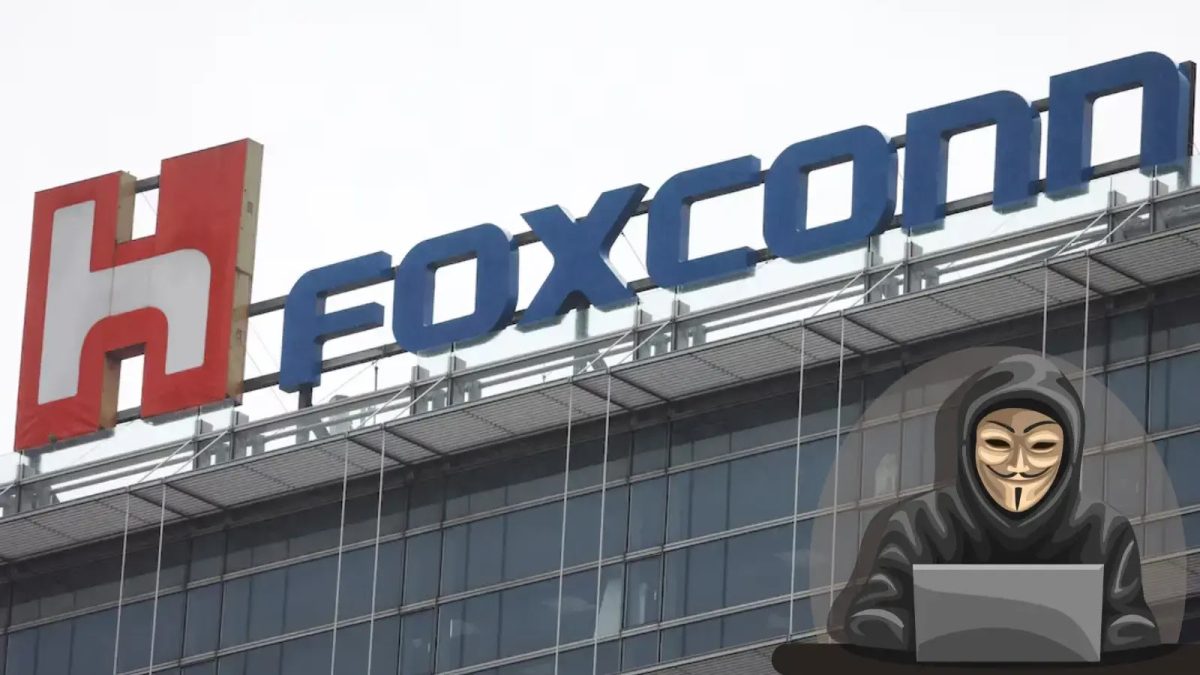

In a stark reminder of how vulnerable global supply chains have become, Foxconn has confirmed a cyberattack on its North American operations. The company, the world’s largest electronics manufacturer, went public after the Nitrogen ransomware gang posted it on their data leak site. They claimed to have stolen around 8 terabytes of sensitive files, including documents tied to Apple, Google, Intel, Dell, and Nvidia.
The gang made their move public on a Monday, boasting they had exfiltrated over 11 million files from Foxconn’s internal systems. The following day, Foxconn acknowledged the attack in a statement to The Register. “Some of Foxconn’s factories in North America suffered a cyberattack,” a company spokesperson said. “The cybersecurity team immediately activated the response mechanism and implemented multiple operational measures to ensure the continuity of production and delivery.” Reports suggest the affected facilities include the Mount Pleasant, Wisconsin plant and a factory in Houston, Texas. Disruptions were serious enough that some staff resorted to pen and paper, and in some cases stayed home entirely while operations stabilized.
Inside the Nitrogen Ransomware Gang’s Claims
Nitrogen is a ransomware operation that first surfaced in 2023. Security researchers believe it was built on leaked source code from the Conti 2 builder, and it shares DNA with the infamous ALPHV/BlackCat ransomware ecosystem. The gang operates a classic double-extortion model: they encrypt a victim’s data while simultaneously threatening to leak it publicly if demands aren’t met. This playbook is well worn, but the scale here is anything but ordinary.
The gang claims to have swiped everything from financial documents and circuit board layouts to temperature sensor data and integrated circuit documentation. Even more alarming, sample files released by Nitrogen reportedly include network topology maps for AMD, Intel, and Google projects. Security analyst Mark Henderson didn’t mince words: “The real concern is that Google and Intel’s network topologies have been stolen. Because this is an architectural map of operational infrastructure, attackers could use this data to identify vulnerabilities in data centers around the world.” Cue the collective shudder from IT teams at those companies.
What Was Actually Stolen from Foxconn?
But let’s apply a dose of skepticism. While the gang claims Apple project files are in the haul, AppleInsider reported that the available sample files do not appear to contain Apple circuit diagrams, product development documents, or quality control data. Foxconn’s Mount Pleasant facility primarily manufactures televisions and data servers, not Apple devices. So it’s possible Nitrogen is exaggerating to inflate the ransom’s leverage, a common tactic in the extortion business.
Still, the impact is undeniable. The sample files that have surfaced include financial records from the Houston facility and intricate technical documentation. For anyone who’s ever managed a factory floor, the thought of network architecture blueprints falling into criminal hands is a nightmare scenario. Those maps could be used to map out future attacks on other facilities, not just Foxconn’s.
A Troubling Pattern for the World’s Largest Electronics Manufacturer
This isn’t Foxconn’s first rodeo with ransomware, and that’s the worrisome part. This marks at least the third major ransomware attack on the company. Each incident hammers home how deep the security vulnerabilities run in global electronics supply chains. When a single manufacturer handles parts for Apple, Intel, and Google, a breach there can ripple outward in ways that are hard to fully quantify.
The downstream risk for those tech giants is significant. If their infrastructure blueprints are now in criminal hands, attackers could use those maps to find chinks in data centers across the globe. It’s not exactly a direct compromise of Google’s cloud, but it’s a treasure map for anyone looking to cause trouble. Foxconn has stated that affected factories are currently resuming normal production, though they declined to confirm whether any customer data was actually stolen. That silence speaks volumes.
The Broader Implications for Supply Chain Security
Here’s where things get interesting for developers and security pros. The Nitrogen gang’s tactics are almost textbook: use double extortion, release samples to prove the breach, and hope the victim folds. But what happens when the victim is a manufacturing giant and the stolen data includes network topology maps for some of the most valuable companies on Earth? The attack surface just expanded exponentially.
Consider this: if a gang can steal server schematics and network diagrams from a Foxconn factory tied to AMD or Intel, they can potentially learn where critical infrastructure is housed, what protocols are used, and where the weak points are. That kind of intel is gold for ransomware groups and nation-state actors alike. It’s not just about a one-time ransom; it’s about selling or leveraging that information for years.
Foxconn says its cybersecurity team is now stabilizing operations, but the damage to reputation and trust may take much longer to repair. For the tech giants whose blueprints may now be in play, this incident is a wake up call. Relying on a single massive supplier creates a single point of failure, and that failure just sent a shockwave through the industry.