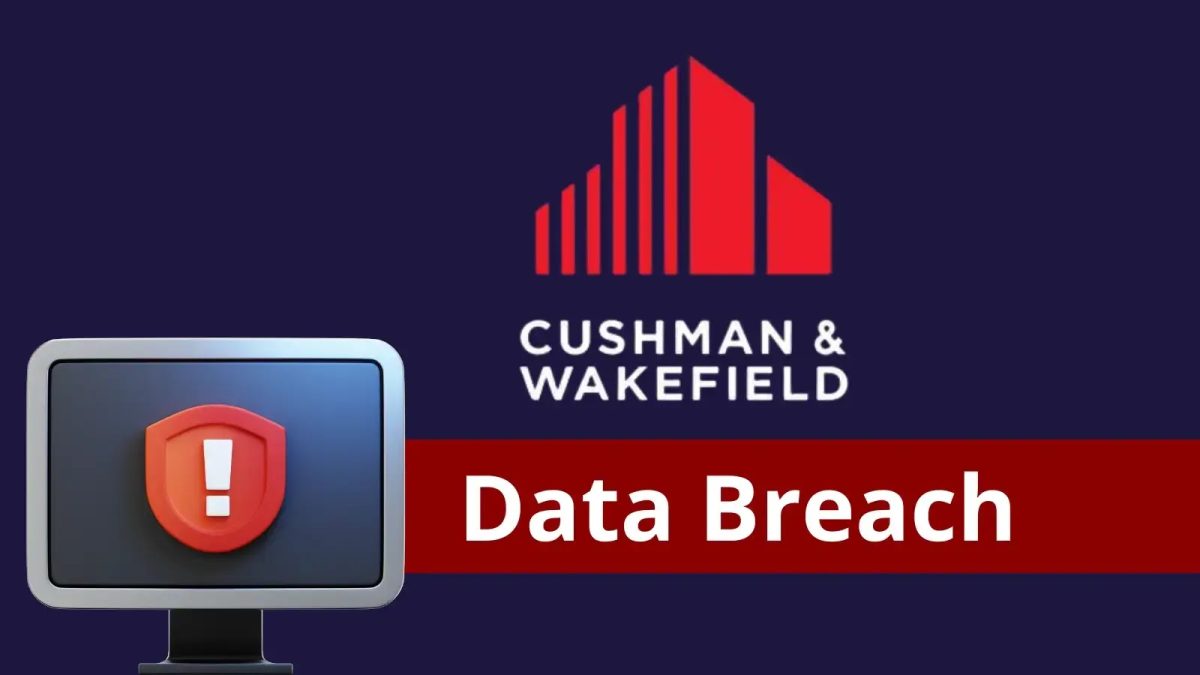

Another day, another data breach. But this one hits a bit differently, not least because it involves one of the largest commercial real estate firms on the planet and a notorious cybercriminal gang that doesn’t bluff. In May 2026, Cushman & Wakefield confirmed that threat actors had successfully stolen and subsequently dumped online the personal and professional data of more than 310,000 individuals. The attack was a classic pay or leak scheme, and when the company refused to cave, the criminals made good on their threat.
The group behind the operation is ShinyHunters, a name that should send a shiver down the spine of any corporate security team. These are the same folks who previously breached Ticketmaster, AT&T, and Santander Bank. Their modus operandi is distressingly effective: they don’t always rely on sophisticated zero-day exploits or brute force. Instead, they use vishing, a phone based social engineering technique, to talk their way past human defenses.
How a Phone Call Unlocked a Corporate Fortress
According to Cushman & Wakefield’s own admissions, the attackers gained initial access through vishing. That means an employee received a phone call from someone who sounded legitimate, likely a colleague, an IT support agent, or a trusted vendor. Over the course of that conversation, the attacker coaxed the employee into handing over credentials or granting remote access. It’s a deceptively simple attack vector, and it works because it targets trust, not technology.
Once inside, ShinyHunters moved laterally, exfiltrated a large trove of business records, and then made their demands. When Cushman & Wakefield decided not to pay the ransom, the group followed through. The stolen data was published publicly and later indexed by Have I Been Pwned on May 12, 2026, making it searchable for anyone who might be affected.
The Goldmine of Corporate Dossier Data
What exactly was taken? The leaked dataset is not the typical haul of credit card numbers or Social Security IDs. Instead, it’s a rich collection of professional contact information. The compromised records include full names, job titles, company names, corporate email addresses, business phone numbers, and physical office addresses. In total, the stash spans both internal Cushman & Wakefield accounts and tens of thousands of external contacts from clients, partners, and vendors.
You might be thinking: so what? It’s just business cards. But here’s the problem. This kind of data is a spear phisher’s dream. With a person’s full name, position, and company email, an attacker can craft a highly convincing email that appears to come from a trusted colleague. They can impersonate a manager, a client, or a vendor with alarming precision. This is the exact recipe for a business email compromise (BEC) attack, one of the most lucrative forms of cybercrime.
Beyond the Leak: The Real Risk to Professionals
Let’s put this in perspective. Imagine you’re a real estate agent, a property manager, or a legal consultant who has exchanged emails with Cushman & Wakefield. Suddenly, a stranger knows your name, your boss’s name, your corporate phone number, and the layout of your office building. That stranger can now call or email you, referencing a recent conversation you had with your contact at the firm, and ask you to click a link or approve a payment. Would you suspect a thing?
That is the danger of a corporate dossier breach. The data is not financial, but it is contextual. It provides the ammunition for highly targeted social engineering campaigns. Attackers can use it to bypass spam filters, generate trust, and trick victims into revealing additional credentials or wiring funds to fraudulent accounts.
Cushman & Wakefield has not disclosed every detail of the intrusion. But the fact that ShinyHunters used vishing as the initial foothold is a sobering reminder that no matter how strong your firewall or endpoint detection is, the human element remains the weakest link. You can patch a server in minutes. But training an employee to hang up on a convincing caller who sounds like the CEO? That takes time, repetition, and a culture of skepticism.
What Should Affected Individuals Do Now?
If you have ever worked with, for, or alongside Cushman & Wakefield, you should assume your professional contact information is now circulating among cybercriminals. The first step is to check Have I Been Pwned using both your corporate and personal email addresses. That database is the primary repository for this leak, and it will tell you if your details are included.
Next, become hyper vigilant about unsolicited communications. If an email or phone call claims to be from someone at Cushman & Wakefield, especially if it involves a request for credentials, a payment, or a file download, treat it with extreme suspicion. Verify the request through a separate channel, not by replying to the same email thread. And if you haven’t already enabled multi factor authentication on your business accounts, now is the time. It won’t stop a social engineering attack cold, but it will add a critical barrier if an attacker tries to use stolen credentials to log in.
Report any suspicious activity to your IT or security team immediately. The attackers now have enough context to impersonate colleagues or clients convincingly. If you get a weird text from your boss asking for a password reset, pick up the phone and call them. Not the number in the text, the number you already have saved.
A Broader Warning for the Real Estate Sector
This breach is not just a problem for the affected individuals. It is a systemic warning for the entire commercial real estate industry and for any sector that relies heavily on email based communication and external partnerships. Real estate firms handle massive volumes of sensitive data: lease agreements, financial statements, building access logs, and client lists. But they often lag behind financial institutions in cybersecurity maturity.
ShinyHunters has demonstrated a pattern of targeting these kinds of companies, and they are unlikely to stop here. Their reliance on vishing is a shift away from technical exploits toward psychological manipulation. Security teams need to update their incident response plans accordingly. Employee awareness training should include phone based social engineering scenarios. Simulated vishing calls should be as common as phishing simulations.
Beyond the individual and organizational response, there is a broader question here. As more of our professional lives become digitized and interconnected, the boundary between public and private information blurs. A work email address and a job title might not seem sensitive. But in the hands of a skilled attacker, those details are the keys to a kingdom. The breach at Cushman & Wakefield proves that the threat landscape is evolving, and the human firewall is both the strongest defense and the most vulnerable one.
Looking ahead, we can expect more attacks like this one. Not because the technology to stop them doesn’t exist, but because the easiest way in is still a voice on the phone asking for a favor. Until companies start treating vishing with the same seriousness as phishing, the calls will keep coming. And someday, they might come for you.