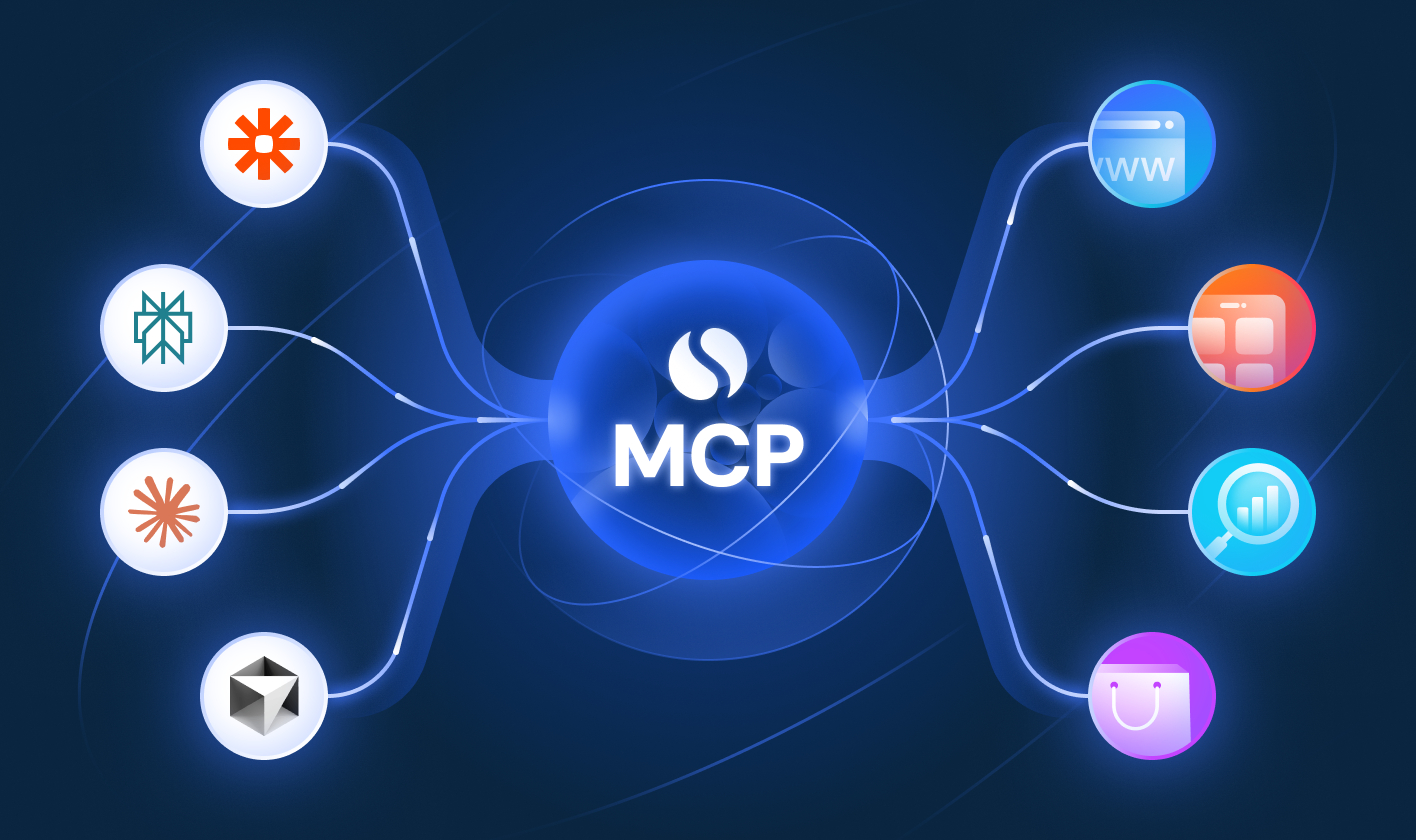

If you have spent any time around modern software or AI systems, you have probably heard APIs and MCPs talked about in the same sentence. They both move data from point A to point B, but they are designed for entirely different consumers. One expects a human or another application to make the call. The other expects an AI model to decide what it needs, sometimes before it even knows what it is looking for.
APIs, or Application Programming Interfaces, have been the backbone of software communication for decades. An API sends a request in a predetermined format to another piece of software, and it gets a response back in that same agreed structure. Every detail of the exchange, the protocol, the method, the expected fields, is hard-coded by developers. That makes APIs precise and reliable, unless one side changes the rules. Then everything breaks, and someone gets paged at 2 a.m.
What Makes MCPs Different for AI Models
MCP stands for Model Context Protocol, and it is a newer concept built specifically for large language models. While an API is a conversation between two applications, an MCP is a conversation between an LLM and a data source. The model gets to choose which tools or resources it wants to use, based on what it thinks will help answer the user’s question. That is a fundamentally different way of working.
Think of an API like a vending machine. You press a button, you get a specific snack. You know exactly what you are asking for, and the machine returns exactly that. An MCP is more like a buffet where the model walks around, looks at what is available, and picks what it needs. It might grab some context, trigger an action, or use a reusable prompt template to speed up a common task. The buffet decides what is on offer, but the model decides what to take.
Tools, Resources, and Prompts in an MCP Server
An MCP server exposes three types of capabilities. Tools are actions the model can trigger, such as creating a file or querying a database. Resources are pieces of information the model can read as background context. Prompts are prebuilt templates that save users from typing the same detailed instructions every time they perform a routine action. All three are defined by rules set up in advance, which determine what data is available and who can access it.
The critical difference is that the model itself is the direct consumer of the data. It decides, in real time, which tools or resources seem relevant to the user’s request. This is not a handshake between two known systems. It is an open-ended negotiation where the model tries to figure out the most efficient path to an answer.
Why MCPs Are Not Just API Wrappers
A common misconception is that MCPs are just a thin layer over APIs. In some systems, an MCP server does call an API behind the scenes. But that is not the point. The real issue is data volume. An API often returns everything it has, because it was designed for a human or another application to filter through the results. An API for a customer database might return fifty fields, including the customer’s middle name, favorite color, and last login date.
When an LLM receives all fifty fields, it has to process every single one. Every byte of data consumes tokens, and tokens cost money. Worse, the model does not know which fields are relevant until it has already burned processing cycles to figure that out. It might even latch onto irrelevant data and produce an inaccurate answer. If you ask for an account status and the model gets the full customer record, it might decide to tell you about their last purchase instead of their payment standing.
In an ideal MCP setup, tools are designed around the tasks the model needs to complete. If a user asks how many customers are subscribed to a specific service, the MCP tool returns just that number. Not the whole customer history, not the billing address, not the support ticket log. Just the number. That is lean, efficient, and far less likely to confuse the model.
When to Use an API Versus an MCP
Use an API when two applications need to talk, and both parties know exactly what information is required. A website pulling a user’s profile, a mobile app fetching a payment status, or a reporting tool updating a dashboard are all classic API use cases. The caller knows what it wants, and the provider knows what to return.
Use an MCP when the end consumer of data is an AI model that needs access to undefined information or actions. An AI assistant answering varied staff questions, or one tasked with reviewing internal documents, benefits from an MCP server because the nature of each query changes. One question might require a database lookup, while the next needs a file read and a triggered email. The model decides the path, not a hard-coded API endpoint.
In many organizations, both approaches coexist. A customer app might call an API to display an account balance. The same app might use an MCP server to power an AI assistant that answers open-ended questions. Both systems can reach the same underlying data, but they do so through different interfaces, depending on who is asking.
Security and the Role of MCP Gateways
As MCP usage grows, organizations need to know which AI tools are requesting data from which systems, and what they are allowed to access. Enter the gateway, a software layer that sits in front of both API and MCP services. A gateway handles authentication, rate limiting, logging, monitoring, and access control. It acts like a security guard who checks badges before letting anyone into the building.
Without a gateway, it becomes nearly impossible to audit AI behavior. Did that model just query the HR database? Should it have? Is it making too many requests in a minute? A gateway brings visibility and governance to what can otherwise feel like a black box of AI activity. As AI agents become more autonomous, the role of the gateway will only become more critical. It is not just about keeping bad actors out. It is about making sure the good actors, even the non-human ones, stay on the right side of the data fence.
The real challenge ahead is not about choosing between APIs and MCPs. It is about building systems where both can coexist, where a gateway manages the chaos, and where models are empowered to fetch only what they actually need. That is a future worth engineering.