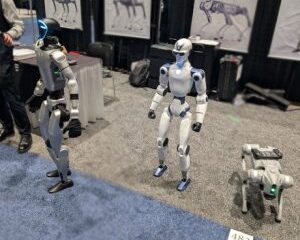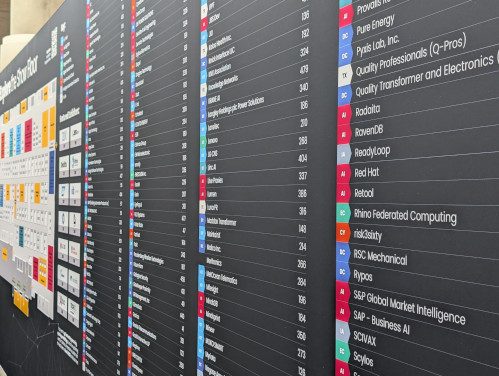

Walking the floor at TechEx North America, you could be forgiven for scanning the horizon for the next shiny AI demo. That kind of sizzle is what draws the crowds. But the real action at this year’s event in Santa Clara happened in the quieter corners: the panel discussions, the hallway conversations, and the deeply technical sessions that tackled the unglamorous, stubborn plumbing of enterprise technology.
Across four parallel tracks spanning edge computing, IoT, data centers, and cybersecurity, a single, sobering question emerged. What exactly needs to exist around artificial intelligence before it can do real, physical work in a factory or a boardroom? The answer, it turned out, had less to do with model architecture and everything to do with power grids, latency budgets, and trust.
Edge Computing: Where Physics Meets Business Logic
The Edge Computing track didn’t bother with hype. It started with a firm premise, delivered by Ed Doran of the Edge AI Foundation, that the edge is a demanding and often unforgiving environment. Sessions immediately dove into the messy reality of scaling deployments across multi-site businesses, where a uniform rollout is a fantasy and each location brings its own legacy quirks.
Representatives from Akamai, Spectro Cloud, Schneider Electric, and TÜV Rheinland grappled with the risk profiles that shift when you move intelligence closer to spinning machinery. A faster local decision might cut dependence on central cloud services. Yet, that same speed can introduce blind spots. Who owns observability when the machine is making the call autonomously? The consensus: pushing computation to the edge forces a company to reassess its very definition of data value.
Industrial Automation and the IIoT Reality Check
The Industrial IoT and Digital Twins track took a hard look at the gap between a polished demo and a system that actually survives contact with an old milling machine or a 20-year-old SCADA network. This is the purgatory that plagues pilot projects: the proof-of-concept works beautifully in a presentation but stalls the moment it needs to communicate with legacy software.
Consider the Rockwell Automation and Ford session on physical AI and connected asset intelligence. Scaling a project that hums along in a lab but falls apart on the factory floor is a classic enterprise headache. The real challenge, one speaker noted, is injecting intelligence into daily operations without creating yet another dashboard that nobody owns or trusts. Digital twins got similar scrutiny. The useful version isn’t a glossy 3D replica for show. It is an operational model that actually helps a facility manager decide when to service a pump or how to re-route material flow during a disruption.
The Data Center Congress: AI Strategy Gets Physical
If the edge track was about the brain, the Data Centre Congress was unapologetically about the brawn. Construction timelines, power procurement, cooling methods, water availability, and the network spine needed to support dense compute all took center stage. The host city, Santa Clara, even shared its own data center journey, offering a rare behind-the-scenes look at municipal planning.
The central insight here was one of economics versus physics. AI models evolve every quarter. Data centers take years to permit, build, and cool. That mismatch is not a minor friction point. It is the defining tension of the current AI boom. Water and power constraints, presenters argued, cut through the rhetoric about how quickly AI can scale. Without serious planning for physical infrastructure, the stampede toward productivity will hit a very real, very hot wall.
Cybersecurity: Trusting the Unseen Hand
The Cyber Security and Cloud Expo track offered a parallel narrative. If AI is going to make decisions on the factory floor or in the cloud, who validates those decisions? Sessions explored how zero-trust principles, originally designed for IT networks, can be applied to control systems and operational technology. The goal is not just to protect data but to ensure that an autonomous machine does not act on a corrupted signal or a poisoned model.
Vendors and practitioners alike stressed that security cannot be bolted on after deployment. It must be embedded in the inference pipeline itself. After all, a model that is 99 percent accurate is still vulnerable to adversarial inputs. And in a physical factory, one wrong decision can cost more than a data breach; it can cost a limb or a production line.
Siemens and LG CNS, along with Boston Dynamics, linked ideas across the show’s strands. The takeaway from every conversation was this: smart systems, whether embedded deep in engineering sites or sitting in a back office, must be designed in genuine concert with the people or machines they aim to serve. That means looping in operators early, respecting existing workflows, and never assuming that an algorithm alone can solve a messy human problem.
TechEx North America 2024 did not offer easy answers. It offered something rarer: a clear-eyed map of the obstacles ahead. The next wave of enterprise AI will not be built on better GPUs alone. It will depend on hardened infrastructure, stable power sources, and trust architectures that span from the chip to the cloud. And maybe, just maybe, on the humility to admit that a good demo is not the same as a working factory.