
A Wolf in Ad-Blocker Clothing
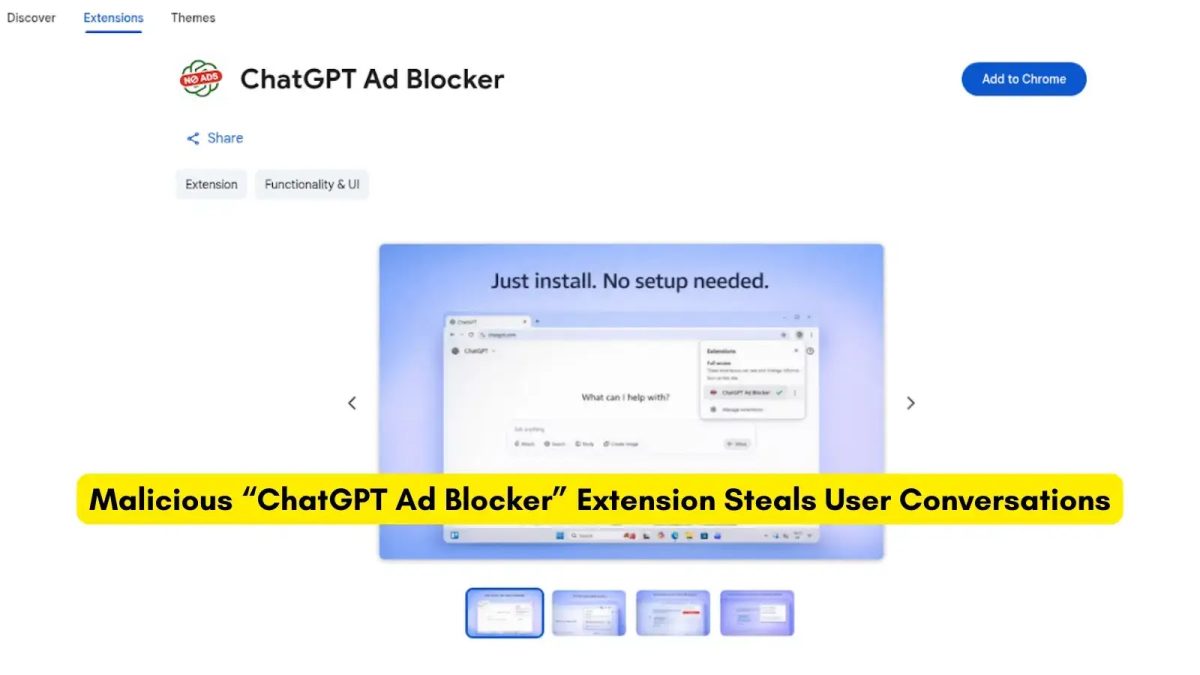
In a stark reminder that browser extensions are a double-edged sword, a malicious Google Chrome add-on has been caught red-handed pilfering private conversations from ChatGPT users. Dubbed “ChatGPT Ad Blocker,” this extension cynically capitalized on widespread user annoyance over OpenAI’s introduction of ads for free-tier accounts. Instead of providing the promised relief, it operated as a sophisticated data harvesting operation, silently siphoning off every prompt and response.
The Mechanics of a Digital Heist
How does this digital pickpocket work? Upon installation, the extension establishes a persistent background process that activates every hour. Its first order of business is to fetch a remote configuration file from a GitHub repository, a clever tactic that allows the attacker to update the malware’s instructions on the fly. No new update from the Chrome Web Store is needed, meaning the extension’s behavior can shift without raising a single user alarm.
When a victim navigates to the ChatGPT website, the malicious code springs into action. It injects a hidden script directly into the webpage. Security analysts at DomainTools, who first uncovered the scheme, noted a particularly brazen detail: the extension’s advertised ad-blocking functionality was completely disabled in its source code. It was never intended to work.
The real function was far more invasive. The injected script clones the page’s entire Document Object Model (DOM), which is the structural representation of the webpage. It then strips away all visual elements like images and styles, meticulously preserving only the plaintext of the user’s ongoing dialogue. Think of it as a thief who ignores the fancy picture frames and goes straight for the confidential documents inside.
The Data Exfiltration Pipeline
With the conversation data captured, the extension packages it into a neat HTML file named “page_dump.html.” This digital transcript doesn’t linger on the user’s machine. It is immediately transmitted via a hardcoded webhook URL to a private Discord channel, a popular communication platform often misused by attackers for its ease of data collection.
Inside that channel, an automated bot would announce “New Ad Report Received” with each data dump. This label is a masterstroke of misdirection, designed to camouflage the theft as benign activity if the channel were ever discovered. It’s a classic spycraft technique applied to the digital realm: hide in plain sight by making the illicit seem mundane.
Connecting the Dots to a Developer
Investigators traced the extension’s code back to a GitHub account under the handle *krittinkalra*. This account presented a major red flag for security researchers. It had lain dormant for over five years before suddenly reactivating with a sharp, suspicious pivot. The developer’s history shifted abruptly from Android app development to crafting JavaScript-based browser malware.
Further scrutiny revealed the same developer is publicly associated with two AI-integrated online services: AI4ChatCo and Writecream. Both platforms process user data and interface with large language models, placing them in a position of significant trust. This connection has prompted urgent calls from the security community for independent audits of these services. Could tools designed to help users also be watching them?
The Broader Threat Landscape
This incident is not an isolated curiosity. It represents a dangerous trend where the explosive popularity of AI platforms creates fertile ground for social engineering. Attackers are crafting fake utility tools that prey on legitimate user grievances, whether it’s ad-blocking, enhanced features, or free access. The promise of a better experience becomes a Trojan horse for data theft.
Browser extensions, by their very nature, require broad permissions to function. A simple ad blocker, for instance, needs permission to “read and change site data” on all websites. In the wrong hands, that permission is a skeleton key to every private conversation you have on a web-based platform. The trust we place in these small pieces of software is immense, and often, poorly scrutinized.
Protecting Yourself in an Age of AI Add-Ons
So, what can users do to shield themselves? Vigilance is the first and most effective layer of defense. Conduct a regular audit of your installed browser extensions and ruthlessly remove any third-party tools, especially those promising to modify or enhance popular AI platforms like ChatGPT, Claude, or Gemini. If you didn’t get it directly from the official developer or a fiercely reputable source, question its necessity.
Avoid unofficial AI add-ons altogether. The convenience they offer is rarely worth the risk of handing over keys to your digital kingdom. When you do install an extension, make a habit of checking the developer’s reputation, looking for transparent codebases, and verifying a history of active maintenance. Stick to verified publishers in the official Chrome Web Store or Firefox Add-ons site, though remember that even these marketplaces are not impervious to malicious submissions.
Treat any service linked to this incident, namely AI4ChatCo and Writecream, with heightened caution until comprehensive, independent security audits can verify their integrity. In cybersecurity, guilt by association is a prudent principle for personal safety.
Looking Ahead: Trust in the Age of AI Assistants
As AI assistants become more deeply woven into our daily work and personal lives, they accumulate our most sensitive thoughts, business strategies, and creative ideas. This makes them a high-value target, arguably more tempting than a password manager because the data is contextual and immediately useful. The attack surface is no longer just our financial data; it’s our intellect and our private deliberations.
This episode serves as a critical wake-up call for both users and platform providers. For users, it underscores that the ecosystem around a major tech platform can be as hazardous as the platform itself. For companies like OpenAI, it highlights a responsibility to either provide official, safe extensions for common user demands (like ad control) or more aggressively police their brand’s misuse in third-party markets. The future of human-AI interaction depends not just on smarter models, but on a secure and trustworthy environment where those conversations can happen. The next wave of malware might not just steal your chat history; it might subtly manipulate the AI’s responses to steer your decisions. The arms race for your attention has evolved into a battle for your trust.