
A Critical Flaw in the Wild
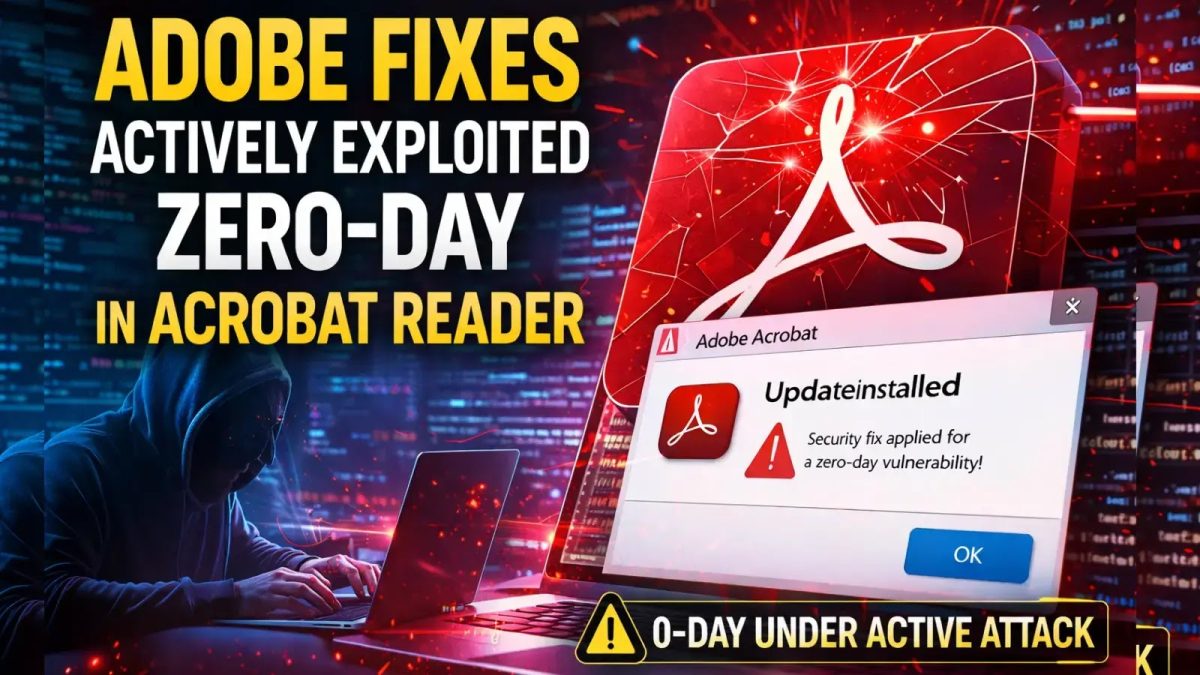
Adobe has issued an urgent security update to address a critical zero-day vulnerability that is already being actively exploited by attackers. The flaw, identified as CVE-2026-34621, impacts Adobe Acrobat and Acrobat Reader on both Windows and macOS platforms. This isn’t a theoretical threat; malicious actors are already using it in the wild, making immediate action non-negotiable for millions of users.
How the Exploit Works
The vulnerability stems from a Prototype Pollution issue, technically categorized as an improperly controlled modification of object prototype attributes (CWE-1321). In simpler terms, think of it as a flaw in the software’s blueprint that allows an attacker to inject malicious instructions. When a user opens a specially crafted PDF document in a vulnerable version of Acrobat or Reader, those instructions can execute arbitrary code on the victim’s machine.
This execution happens with the same permissions as the logged-in user. If you’re an administrator, so is the malware. Adobe has assigned the bug a critical CVSS score of 8.6, highlighting its severity and relatively low barrier to exploitation; it primarily requires local access and some user interaction, like opening a deceptive file.
Affected Software and Immediate Actions
The security bulletin APSB26-43, released on April 11, 2026, details the affected versions. Both the Continuous and Classic update tracks for Acrobat DC, Acrobat Reader DC, and Acrobat 2024 are vulnerable if they are on or below versions 26.001.21367 and 24.001.30356, respectively. The scope is broad, covering the most common distributions of this ubiquitous software.
To close this dangerous security hole, users and IT administrators must upgrade immediately. Patched versions are now available: Acrobat and Reader DC Continuous Track should be updated to 26.001.21411, while Acrobat 2024 Classic Track requires version 24.001.30362 for Windows or 24.001.30360 for macOS. Adobe has labeled this a Priority 1 update, its highest severity rating, reserved for flaws under active attack.
The Discovery and the Threat Landscape
Credit for discovering CVE-2026-34621 goes to security researcher Haifei Li of EXPMON, a firm renowned for uncovering high-impact zero-days often used in targeted attacks. While Adobe hasn’t shared specific indicators of compromise, the confirmation of active exploitation paints a clear picture. Attackers are almost certainly distributing weaponized PDFs via phishing emails or malicious websites, luring users with familiar document formats to trigger the payload.
This incident is a stark reminder of why PDF readers remain a prime target for cybercriminals. They are installed on nearly every corporate and personal computer, handle inherently complex file formats, and are trusted implicitly by users. A single successful exploit can open a direct pipeline into a system, making these vulnerabilities incredibly valuable on the dark web.
Patching Strategies for Everyone
For individual users, patching is straightforward. Open Acrobat or Reader, navigate to Help > Check for Updates, and follow the prompts. Many installations are configured for automatic background updates, which should pull this fix down soon if they haven’t already. The key is not to delay; that seemingly innocuous invoice or report PDF in your inbox could be the trigger.
Enterprise environments face a larger challenge but have robust tools at their disposal. IT administrators can deploy these critical patches using management suites like Microsoft’s System Center Configuration Manager (SCCM) or the System Center Updates Publisher (SCUP). Group Policy Objects (GPO) and Apple Remote Desktop provide additional channels for ensuring fleet-wide compliance swiftly.
Beyond the Immediate Fix
Relying solely on patching, while essential, is a reactive strategy. This zero-day should prompt organizations to revisit their broader security posture regarding document handling. Can PDFs from external sources be opened in a sandboxed environment? Are users regularly trained to scrutinize unexpected attachments, even those with a .pdf extension? Defense in depth is the only sustainable approach.
The persistence of these attacks also raises questions about software architecture. As Prototype Pollution vulnerabilities continue to appear in various applications, developers are being pushed to adopt languages and frameworks that mitigate such risks by design. It’s a long-term shift, but a necessary one to reduce the attack surface of foundational software.
Looking ahead, the cycle of vulnerability, exploitation, and patching is relentless. This Adobe fix is a critical stopgap, but the underlying dynamic remains. Threat actors will continue to probe the world’s most popular software for weaknesses, and PDF readers, given their function and prevalence, will always be in the crosshairs. The lesson, as always, is that vigilance and prompt updates are the price of digital security. The next zero-day is already out there, waiting to be found by either the good guys or the bad.